Art Deco Reimagined: Why This Style Still Defines Luxury
Geometry, symmetry, texture and timeless glamour - why Art Deco continues to inspire contemporary interiors.
A style that never really went away
Some design trends come and go. Others become part of the visual language of luxury.
Art Deco belongs firmly to the second category.
Born in the 1920s and 1930s, Art Deco was a celebration of modernity, craftsmanship and luxury. Its characteristic language was built around geometry, symmetry, strong lines, repeated patterns, elegant curves and rich materials.
Almost a century later, those principles still feel remarkably contemporary.
The reason is simple: Art Deco is less about decoration than it is about proportion, rhythm and structure. And these are elements that work just as well in today's architecture as they did when the style first appeared.
Art Deco, without the nostalgia
Contemporary Art Deco does not need to recreate a 1920s interior.
Instead, designers are taking individual elements of the style and translating them into a more restrained, architectural language. Think:
- geometric patterns rather than ornate decoration,
- vertical lines rather than heavy ornament,
- arches and curves rather than rigid symmetry,
- texture and relief rather than printed embellishment,
- metallic and pearlescent finishes rather than excessive glamour.
The result can feel luxurious without feeling old-fashioned.
This is particularly relevant to hospitality, retail and residential projects in the Gulf, where the quality of materials and the detail of the finish play an important role in the overall experience of a space.
Why does Art Deco remain so timeless?
Because its visual principles are remarkably adaptable.
- Geometry creates order.
- Symmetry creates balance.
- Repetition creates rhythm.
- Vertical lines add elegance and can visually enhance the height of a space.
- Curves soften architectural forms.
- Texture adds depth.
- And carefully controlled metallic or pearlescent details introduce light without requiring excessive decoration.
These principles can be interpreted in a dramatic hotel lobby, an elegant restaurant, a private dining room, a VIP lounge or a sophisticated residential interior. The style changes with the materials and colours, but its underlying language remains recognisable.
Art Deco through contemporary wallcoverings
Wallcoverings are one of the simplest ways to introduce these principles into an interior.
A wall does not have to be covered with a large, obvious Art Deco ornament. Sometimes a subtle geometric rhythm, embossed texture or elegant vertical pattern is enough to establish the character of the space.
In the MTM catalogues, you can find several examples of contemporary wallcoverings inspired by this design language, including Len-Tex Gatsby, with its flowing raised pattern; Amelia, with strong verticality and a pearlescent finish; and Rhythm, where Art Deco geometry is combined with softer, flowing curves.
Newmor also offers a range of contemporary Art Deco-inspired designs, including geometric patterns, arches, scallop forms and panel-like compositions. The common thread is not a particular colour or ornament. It is structure, proportion, texture and the way a surface interacts with light.
Art Deco In Contemporary Practice
Click any image to enlarge
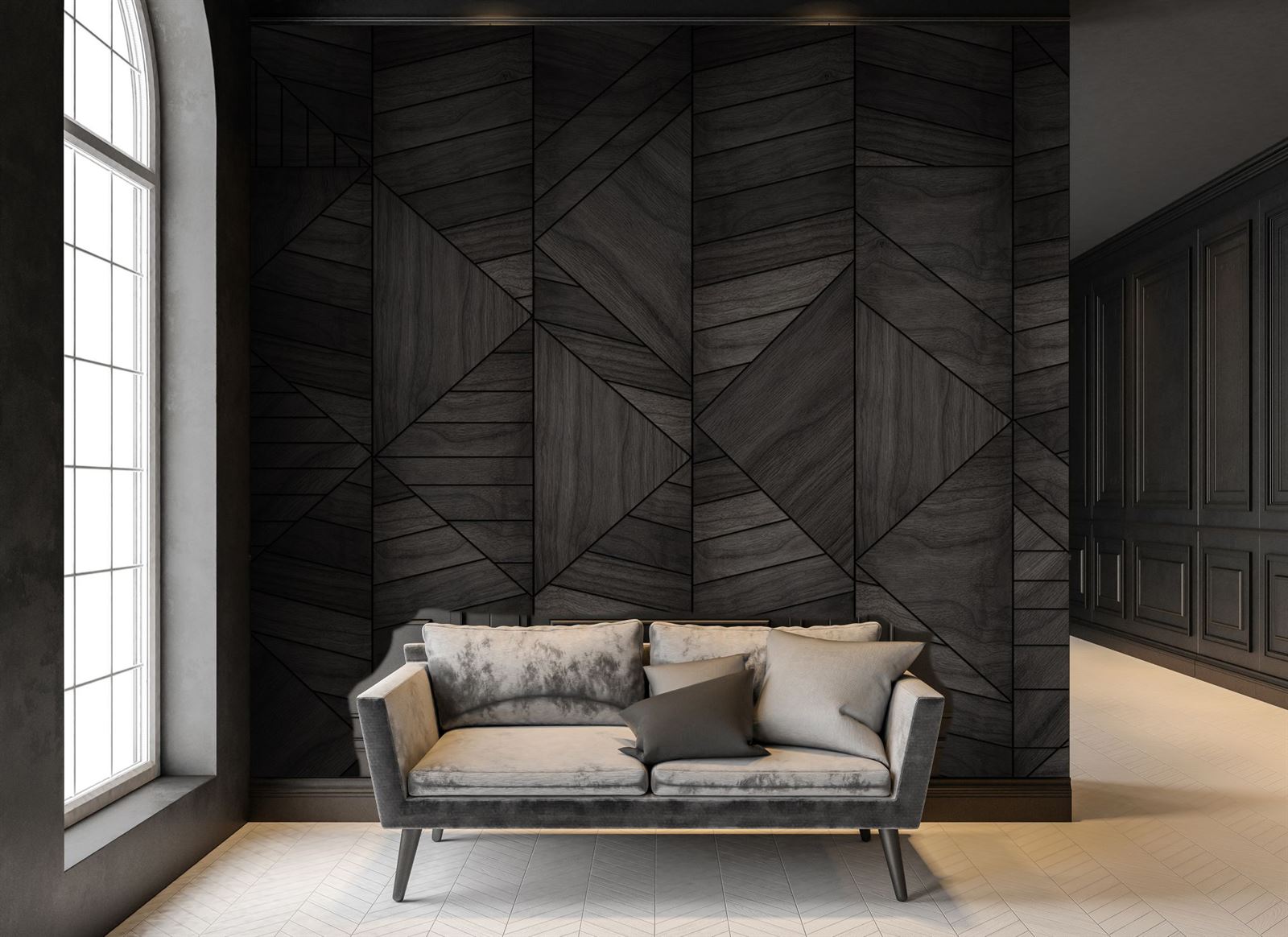
Geometric wood paneling with sharp linear symmetry behind a contemporary sofa
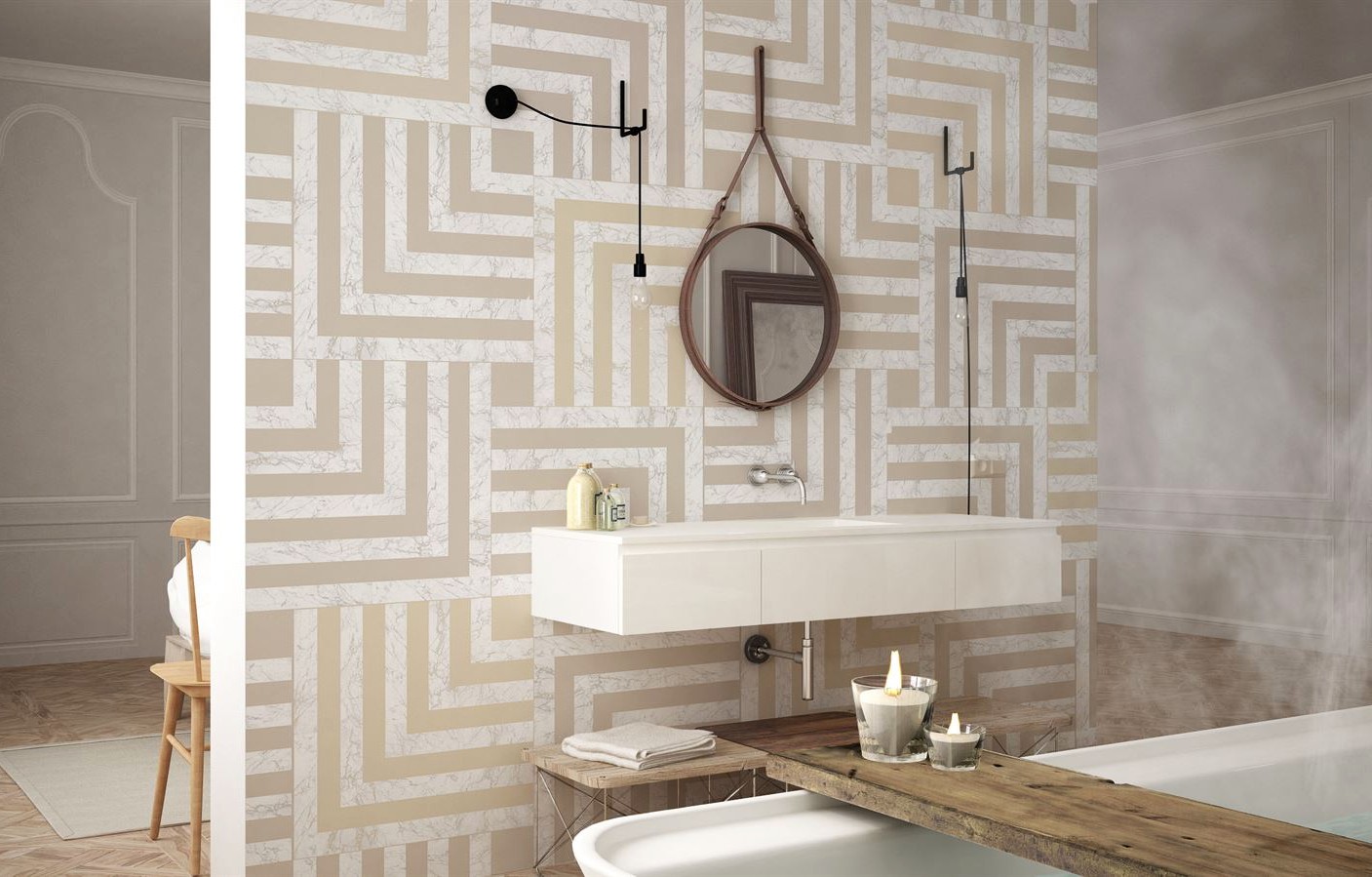
Dynamic geometric marble pattern wallcovering in a refined luxury bathroom
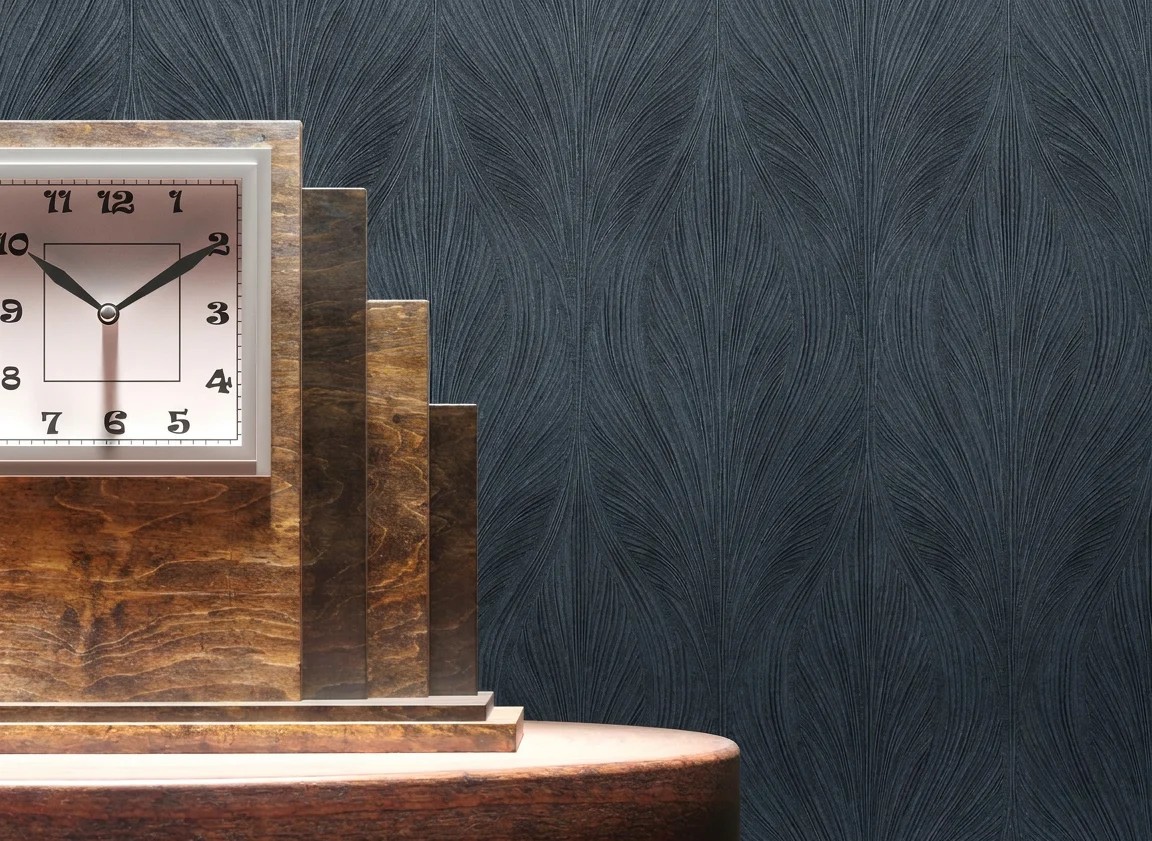
Stepped wooden timepiece against tactile, feather-embossed wallcovering
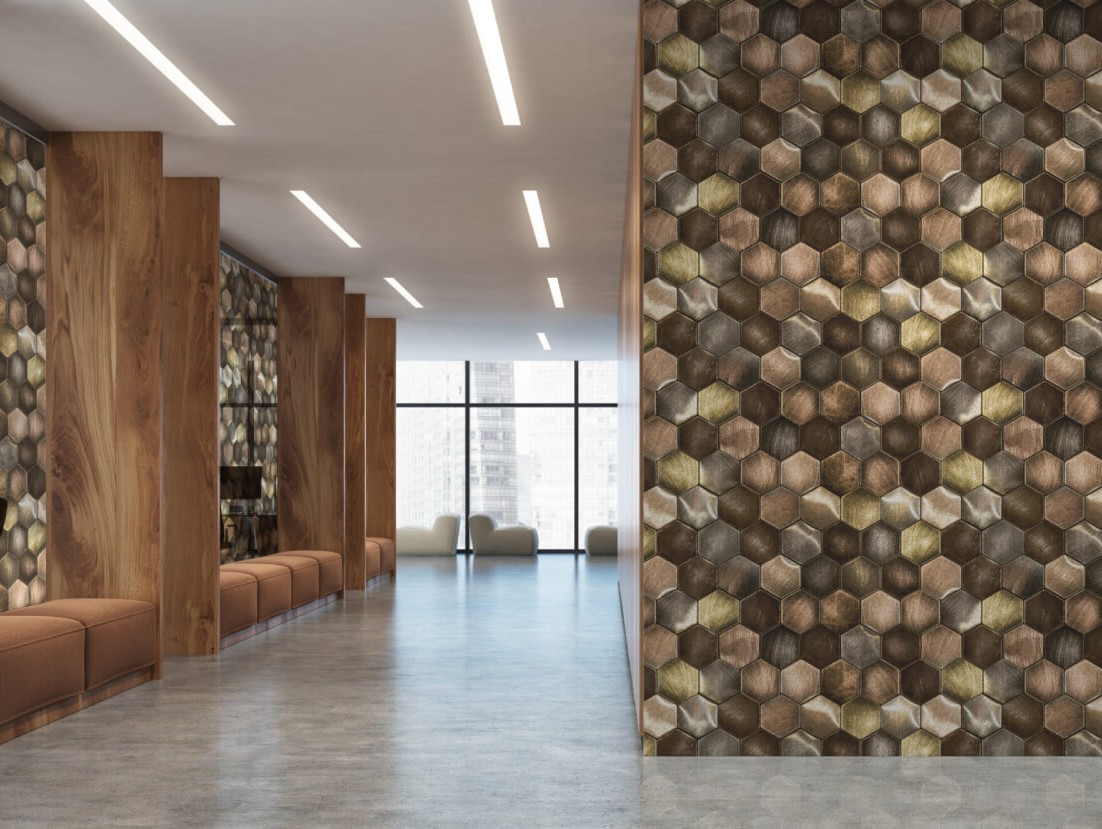
Sculptural metallic hexagon wall finish playing with architectural lighting
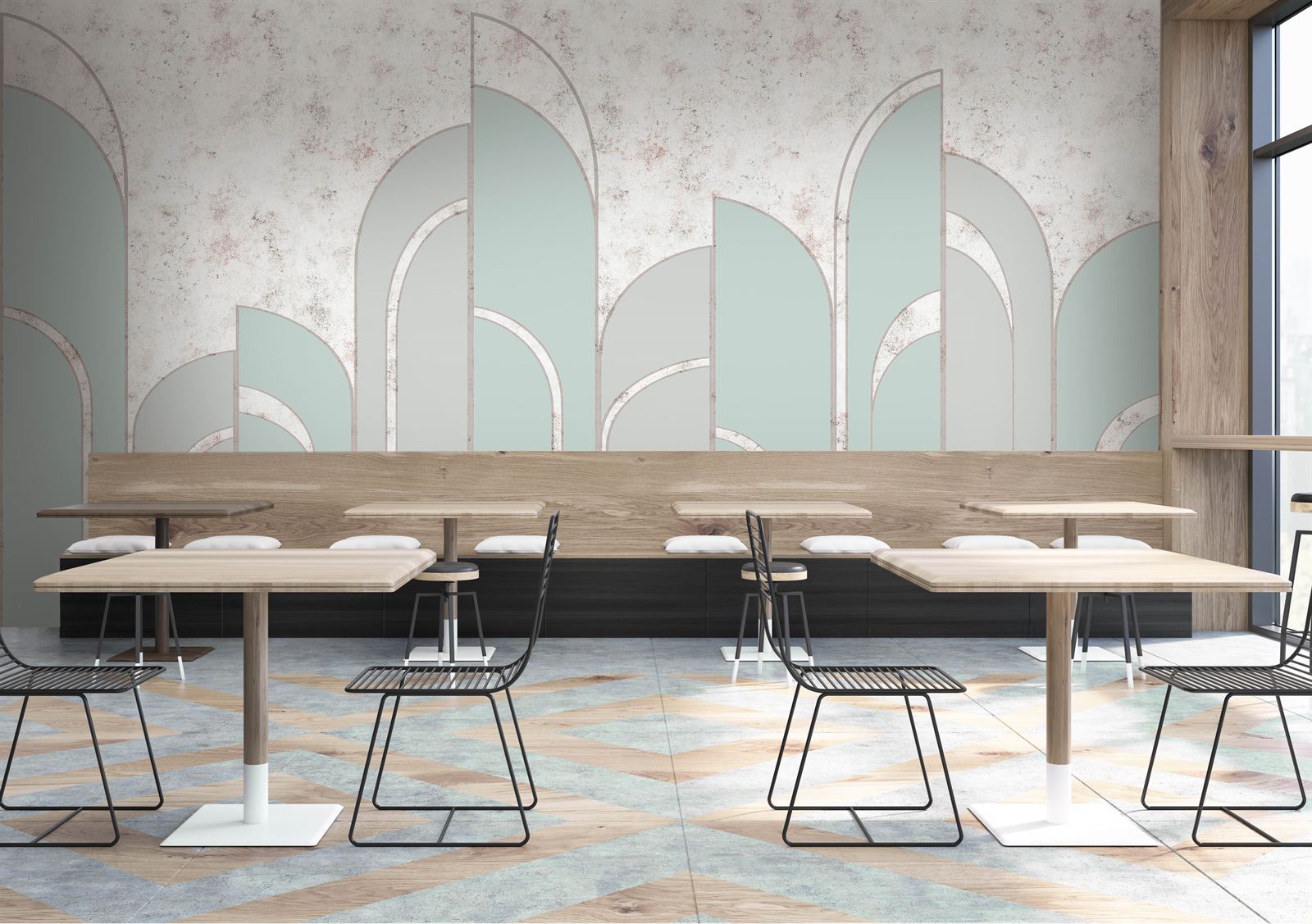
Gentle Art Deco arch motifs and metallic accents in a hospitality setting
Luxury is in the detail
Perhaps this is why Art Deco continues to feel so relevant.
It was never simply about making interiors look expensive. It was about creating a sense of intention - where every line, surface and proportion had a purpose.
That approach translates naturally into contemporary luxury design. A sophisticated wallcovering can provide depth to a quiet neutral interior. A geometric pattern can become the architectural feature of a lobby. A subtle metallic finish can catch the light in a restaurant without overwhelming the space.
The design does not have to shout. It simply has to be well considered.
Art Deco, reimagined
Almost 100 years after its emergence, Art Deco remains remarkably adaptable.
Its forms can become softer or bolder. Its colours can change completely. Traditional ornament can be replaced by texture, relief or geometry.
But the essential principles remain:
- balance.
- rhythm.
- geometry.
- craftsmanship.
- luxury.
That is what makes Art Deco more than a historical style.
It is a design language that continues to evolve - and still has a place in the most contemporary interiors.
Ready to Start Your Next Project?
Whether you're planning a new development, renovating a commercial space, or upgrading your home - we're here to supply the right materials, on time and on specification.